Monday, 25 May 2015

DAY 51. Rome

In the following day we arrived to Civitavecchia, which is a town and comune of the province of Rome in the central Italian region of Lazio. A sea port on the Tyrrhenian Sea, it is located 80 kilometres (50 miles) west-north-west of Rome, across the Mignone river. The harbour is formed by two piers and a breakwater, on which is a lighthouse. The name Civitavecchia means "ancient town".

From here it is a pleasent 1 hour train ride to Rome (12 euros for a return ticket).

Rome is the capital of Italy and region of Lazio. With 2.9 million residents in 1,285 km2 (496.1 sq mi), it is also the country's largest and most populated comune and fourth-most populous city in the European Union by population within city limits. TheMetropolitan City of Rome has a population of 4.3 million residents. The city is located in the central-western portion of theItalian Peninsula, within Lazio (Latium), along the shores of Tiber river. Vatican City is an independent country within the city boundaries of Rome, the only existing example of a country within a city: for this reason Rome has been often defined as capital of two states.
Rome's history spans more than two and a half thousand years. While Roman mythology dates the founding of Rome at only around 753 BC, the site has been inhabited for much longer, making it one of the oldest continuously occupied cities in Europe. The city's early population originated from a mix of Latins, Etruscans and Sabines. Eventually, the city successively became the capital of the Roman Kingdom, the Roman Republic and the Roman Empire, and is regarded as one of the birthplaces of Western civilization. It is referred to as "Roma Aeterna" (The Eternal City)  and "Caput Mundi" (Capital of the World), two central notions in ancient Roman culture.
After the fall of the Empire, which marked the beginning of the Middle Ages, Rome slowly fell under the political control of thePapacy, which had settled in the city since the 1st century AD, until in the 8th century it became the capital of the Papal States, which lasted until 1870.
Beginning with the Renaissance, almost all the popes since Nicholas V (1422–55) pursued coherently along four hundred years an architectonic and urbanistic program aimed to make of the city the world's artistic and cultural center. Due to that, Rome became first one of the major centers of the Italian Renaissance, and then the birthplace of the Baroque style. Famous artists and architects of the Renaissance and Baroque period made Rome the center of their activity, creating masterpieces throughout the city. In 1871 Rome became the capital of the Kingdom of Italy, and in 1946 that of the Italian Republic.
Rome has the status of a global city. In 2011, Rome was the 18th-most-visited city in the world, 3rd most visited in theEuropean Union, and the most popular tourist attraction in Italy. Its historic centre is listed by UNESCO as a World Heritage Site. Monuments and museums such as the Vatican Museums and the Colosseum are among the world's most visited tourist destinations with both locations receiving millions of tourists a year.


49-50. Capri

After a relaxing sea day early morning MSC DIVINA arrived to Naples.
If I'm here, no doubt, I go to Capri.
Capri is an island located in the Tyrrhenian Sea off the Sorrentine Peninsula, on the south side of the Gulf of Naples in the Campania region of Italy. The main town Capri that is located on the island shares the name. It has been a resort since the time of the Roman Republic.
Some of the main features of the island include the following: the Marina Piccola (the little harbour), the Belvedere of Tragara (a high panoramic promenade lined with villas), the limestone crags called sea stacks that project above the sea (the Faraglioni), the town ofAnacapri, the Blue Grotto (Grotta Azzurra), and the ruins of the Imperial Roman villas.
Capri is part of the region of Campania, Province of Naples. The town of Capri is the island's main population centre. The island has two harbours, Marina Piccola and Marina Grande (the main port of the island). The separate comune of Anacapri is located high on the hills to the west.

The ticket price has been increased a lot since my last visit, the return ticket was almost 40 euros/person, and from the harbour to Anacapri another 30 euros/cab.
Anacapri is a magnificiant place , a must to visit site if you are in Italy, near here.


Saturday, 23 May 2015

DAY 47-48. Barcelona

One of my favourite places in Europe.......

Barcelona is the capital city of the autonomous community of Cataloniain Spain and the country's second largest city, with a population of 1.6 million within its administrative limits. Its urban areaextends beyond the administrative city limits with a population of around 4.5 million people, being the sixth-most populous urban area in the European Union after Paris, London, Madrid, the Ruhr area and Milan. It is the largest metropolis on theMediterranean Sea, located on the coast between the mouths of the rivers Llobregat and Besòs, and bounded to the west by theSerra de Collserola mountain range, the tallest peak of which is 512 metres (1,680 ft) high.

Founded as a Roman city, in the Middle Ages Barcelona became the capital of the County of Barcelona. After merging with theKingdom of Aragon, Barcelona continued to be an important city in the Crown of Aragon. Besieged several times during its history, Barcelona has a rich cultural heritage and is today an important cultural center and a major tourist destination. Particularly renowned are the architectural works of Antoni Gaudí and Lluís Domènech i Montaner, which have been designated UNESCOWorld Heritage Sites. The headquarters of the Union for the Mediterranean is located in Barcelona. The city is known for hosting the 1992 Summer Olympics as well as world-class conferences and expositions and also many international sport tournaments.

Barcelona is one of the world's leading tourist, economic, trade fair and cultural centers, and its influence in commerce, education, entertainment, media, fashion, science, and the arts all contribute to its status as one of the world's major global cities. Barcelona is a transport hub with the Port of Barcelona being one of Europe's principal seaports and busiest European passenger port, an international airport, Barcelona–El Prat Airport, which handles above 35 million passengers per year, an extensive motorway network and a high-speed rail line with a link to France and the rest of Europe.
This time I only focused on my favourite places, on the top of the list obviously the market :) at Las Ramblas!


DAY 46. Cadiz

I have never been here before, so I was excited to explore this city. We docked in the downtown area, and it took a pleasent 5 hours walk to visit the city's most important spots.

Cádiz is a city and port in southwestern Spain. It is the capital of the province of Cádiz, one of eight which make up the autonomous community of Andalusia.
Cádiz, the oldest continuously inhabited city in Spain and one of the oldest in western Europe, has been a principal home port of the Spanish Navy since the accession of the Spanish Bourbons in the 18th century. The city is a member of the Most Ancient European Towns Network.
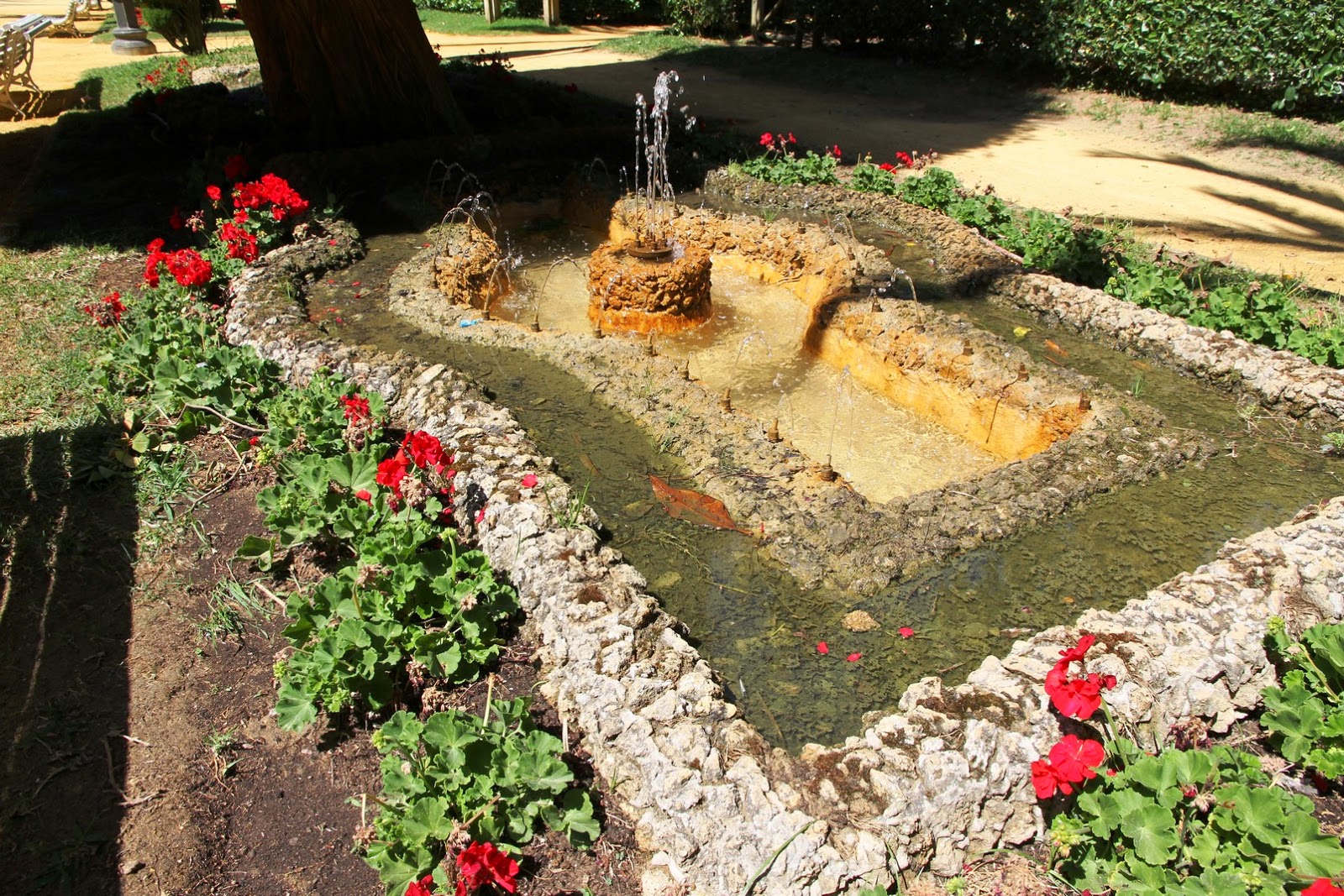
Despite its unique site—on a narrow slice of land surrounded by the sea‚ Cádiz is, in most respects, a typically Andalusian city with a wealth of attractive vistas and well-preserved historical landmarks. The older part of Cádiz within the remnants of the city walls is commonly referred to as the Old Town. It is characterized by the antiquity of its various quarters (barrios), among them El Pópulo, La Viña, and Santa María, which present a marked contrast to the newer areas of town. While the Old City's street plan consists of narrow winding alleys connecting large plazas, newer areas of Cádiz typically have wide avenues and more modern buildings. In addition, the city is dotted with numerous parks where exotic plants flourish, including giant trees supposedly brought to Spain by Columbus from the New World.